On Saturday afternoon April 3 LPWA members David Nathans, Susan Jaffee, Joesph Godfrey and Steve Howard spent an hour and a half removing trash and construction debris that had accumulated over the years from the wooded area along Wrexham Road. Approximately 10 large garbage bags were filled and along with various pieces of scrap metal and construction debris were left along the side of Wrexham Road. Sarah Lawrence College partnered with LPWA and picked up all the waste material the following Monday morning.
Going forward, we encourage all LPWA members walking along Wrexham Road to please take the initiative and pick up miscellaneous pieces litter and trash that accumulate over time. The best defense against future littering and dumping is to try our best to continuously keep the area as litter free as possible.
Next year we’ll be sure to schedule the clean-up event on a non-holiday weekend to allow more members to participate.
We are looking for LPWA member volunteers to meet at the Wrexham Road/Glen Washington Road island on Saturday, April 3 at 4pm to help clean up debris along Wrexham Road bordering Sunnybrook Marsh. It would be appreciated if members could advise via an email (info@lawrenceparkwest.org) if they will be able to participate. Please wear old clothes (long sleeve shirts and pants), heavy shoes or boots, work gloves and of course a mask. With enough volunteers we should be done in less than one hour.
The LPWA Board of Directors met by conference call on January 28. The LPWA communication activity among members, Sarah Lawrence College and the City of Yonkers has significantly increased this year having been greatly facilitated by the LPWA website. Topics have included trash and litter on certain streets, reports of various trespassing incidents, island maintenance and coyote sightings. Serious trespassing incidents should be reported directly to the Yonkers Police Department as they can use the information to establish patterns which can lead to apprehension of the perpetrators.
In 2020, total membership was slightly over 100 homeowners, a high for recent years, which the board believes is largely due to the implementation of the LPWA website. Because of reduced expenses, LPWA had a very solid financial year in 2020 which sets us up well for funding various neighborhood projects in 2021. Upcoming projects under consideration by the LPWA board include curbing of the Hampshire/Hereford Road island, additional LPW signs at entrances to the neighborhood and maintenance of the stone pillars. Maintenance of the stone pillars is a larger project and will require the cooperation of the homeowners near the pillars and the City.
The LPWA Landscape Committee made significant progress in 2020 re landscaping and maintaining the islands despite downed trees due to storms. While continued maintenance is needed, major island landscaping projects are now largely completed. Adding more landscape rocks and curbing will help keep trucks from driving over and damaging the islands. LPWA plans to work with the City of Yonkers to add curbing to the Hampshire/Hereford Road island in 2021.
While LPWA’s 2020 year end membership of 104 homeowners is the highest it has been in recent years, our goal is a minimum of 150 homeowners which represents approximately 50% of the 300 homes in LPW. The LPWA Membership Committee will be working with local realtors to obtain new resident contact information for sending special mailings to introduce them to the neighborhood and the LPWA. LPWA was not able to have its 2020 annual fall gathering and the 2021 fall gathering is unlikely until the pandemic subsides. The 2021 in person annual meeting will likely be conducted by Zoom, as was the 2020 annual meeting.
Responding to increasing sightings and heightened concerns of coyotes in our neighborhood over the past few weeks, two LPWA board members met on Feb 26th with Yonkers Police Department officials, including Captain Patrick Rooney. Rooney is commanding officer of the Yonkers Emergency Services Unit and has both formal education and professional experience in dealing with problem wildlife and coyotes in particular. Please know that Councilman Mike Breen and Yonkers 2nd Precinct CO Captain Andrew McLaughlin helped to make this meeting happen, and we were told that Mayor Mike Spano’s office is also aware of the problem.
To summarize, coyotes, like fox and deer, over the past few decades have increasingly been moving closer into lower Westchester County neighborhoods as their natural wooded habitat has been shrinking and surrounded by residential neighborhoods. The Yonkers officials understand that coyotes are the more aggressive of these species, but under most circumstances they pose little threat to people. Nevertheless, while foraging for scarce food supplies in the winter months, coyotes may become more assertive than is their common behavior.
The following link from the Humane Society will provide members with how to more effective in coping with coyotes in our neighborhood. https://www.humanesociety.org/resources/coyote-hazing
At a recent 2nd Precinct Community Council meeting there was significant discussion on the coyote problem in LPW as well as near the racetrack, St. Joseph’s Seminary, Tibbetts Brook Park and Dunwoodie Golf Course. LPWA is not alone in getting the authorities aware of our concern. This issue is gaining attention across the region and the LPWA board’s next step is for a zoom meeting with the NYS DEC (Department of Environmental Conservation) regional director for wildlife control to gain clarity on the process and policy of solving the coyote problem, in the short- and long- term.
In the meantime, if members have an encounter with an aggressive coyote, please call 914-377-7900. If it is a more immediate threat and you are feeling in danger, call 911. Both numbers are aware of the LPW area coyote issues and they will be responsive to your call.
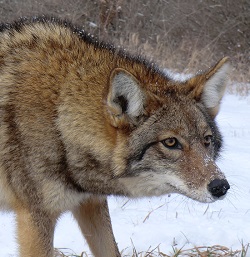 Useful tips for dealing with Coyotes
Due to recent reports of Coyote sightings, the Yonkers Police Department would like to remind residents of these helpful tips from the New York State Department of Environmental Conservation regarding “Coyote Conflicts.” Also please see the attached Coyote Awareness brochure from the City of Yonkers: http://www.dec.ny.gov/animals/6971.html
Coyote Conflicts
The Eastern coyote is firmly established in New York. They live in New York as an integral part of our ecosystems. People and coyotes can usually coexist if coyotes’ natural fear of people is maintained. Coyotes provide many benefits to New Yorkers through observation, photography, hunting, and trapping; however, not all interactions are positive. While most coyotes avoid interacting with people, some coyotes in suburbia become emboldened and appear to have lost their fear of people. This can result in a dangerous situation with pets and young children at the greatest risk.
Below are steps you should take to reduce and prevent coyote problems from occurring. For additional information see our nuissance wildlife species page.
Coyote Encounters
A coyote that does not flee from people should be considered dangerous. Coyotes in residential areas can be attracted to garbage, pet food, and other human-created sources of food. Coyotes can associate people with these food attractants. In some cases human behavior is perceived to be non-threatening by coyotes (running into your home after seeing a coyote is behaving like prey). In short, people may unintentionally attract coyotes with food and people may behave like prey. Add to the mix people intentionally feeding coyotes and the potential for a coyote attack becomes very real.
How to handle coyote encounters:
- Do not let a coyote approach anyone.
- If you see a coyote, be aggressive in your behavior-stand tall and hold arms out to look large. If a coyote lingers for too long, then make loud noises, wave your arms, or throw sticks and stones.
- Contact your local police department and DEC regional office for assistance if you notice that coyotes are exhibiting “bold” behaviors and have little or no fear of people.
- Teach children to appreciate coyotes from a distance. Children are at greatest risk of being injured by coyotes. If a coyote has been observed repeatedly near an area where children frequent, be watchful.
Potential does exist for coyote attacks in New York. However, a little perspective may be in order. On average, 650 people are hospitalized and one person killed by dogs each year in New York State. Nationwide, only a handful of coyote attacks occur annually. Nevertheless, these conflicts are bad for people, pets, and coyotes.
Make your Yard Less Hospitable
Unintentional food sources attract coyotes and other wildlife, as well as increase risks to people and pets.
To reduce risks:
- Do not feed coyotes and discourage others from doing so. Visit our Do Not Feed Wildlife: Why Feeding Wildlife Does More Harm Than Good page.
- Do not feed pets outside.
- Make any garbage inaccessible to coyotes and other animals.
- Eliminate availability of bird seed. Concentrations of birds and rodents that come to feeders can attract coyotes.
Protect your Pets
Take action:
- Do not allow coyotes to approach people or pets.
- Do not allow pets to run free. Supervise all outdoor pets to keep them safe from coyotes and other wildlife, especially at sunset and at night.
- Fencing your yard may deter coyotes. The fence should be tight to the ground, preferably extending 6 inches below ground level, and taller than 4 feet.
- Remove brush and tall grass from around your property to reduce protective cover for coyotes. Coyotes are typically secretive and like areas where they can hide. See our Tips to Eliminate Wildlife Conflicts page for more information.
- Be alert of your surroundings and take precautions such as carrying a flashlight or a walking stick to deter coyotes.
Dogs
Do dog owners need to be concerned about coyotes? The answer is maybe. Conflicts between dogs and coyotes can happen any time of the year, but are more likely in the months of March and April. It is during this time that coyotes are setting up their denning areas for their soon-to-arrive pups. Coyotes become exceptionally territorial around these den sites in an attempt to create a safe place for their young. In general, coyotes view other canines (dogs) as a threat. Essentially, it comes down to a territorial dispute between your dog and the coyote. Both believe that your yard is their territory.
Owners of large and medium sized dogs have less to worry about, but should still take precautions. Owners of small dogs have cause for concern. Small dogs are of greatest risk of being harmed or killed by coyotes. Small dogs are at risk when left unattended in backyards at night and should be supervised by owners. Coyotes have attacked and killed small dogs unattended in backyards. Coyotes may approach small dogs along streets at night near natural areas, even in the presence of dog owners.
Cats
Do coyotes kill cats? Absolutely, but so do foxes, dogs, bobcats, vehicles, and even great horned owls. Cat owners need to be aware that cats allowed to roam free are at risk from many different factors. To protect your cat, keep it indoors, or allow it outside only under supervision. Coyotes in some areas appear to become specialists at catching and killing cats.
Livestock Risk
Problems with coyotes and livestock do occur in New York. Most problems involve sheep or free ranging chickens and ducks. Most problems can be avoided with proper husbandry techniques. It is much easier to prevent depredation from occurring than it is to stop it once it starts.
Coyote Incident Standard Operating Procedures (SOP)
The New York State Coyote Incident Standard Operating Procedures (SOP) have been developed for use primarily by DEC staff who routinely handle phone calls pertaining to coyotes but may be a valuable reference document for other entities interacting with public experiencing conflicts with coyotes (e.g., municipal law enforcement and animal control officers).
View the New York State Coyote Incident Standard Operating Procedures (Revised 2018) (PDF).
Contacts
Regional DEC Wildlife Office
USDA APHIS
1930 Route 9, Castleton NY 12033
Phone: (518) 477-4837
Wildlife Damage website (leaves DEC website)
Find a Nuisance Wildlife Control Operator (NWCO)
Alert sent on 02/06/2021 at 10:37AM EST
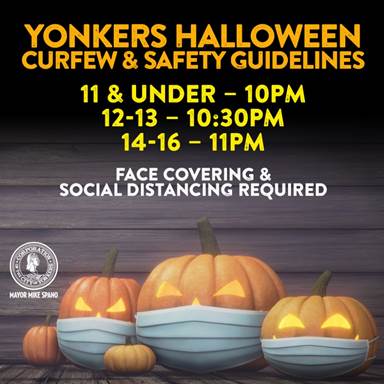
Mayor Spano & Yonkers Police Advise Residents on Halloween Safety Tips:
In order to provide for a safe and enjoyable holiday, Yonkers Mayor Mike Spano today announced that the Yonkers Police Department will issue a citywide curfew for children 16 years of age and younger on Halloween night – Saturday, October 31. In addition, Mayor Spano urges Yonkers residents to follow New York State’s guidance for Halloween this year, avoiding traditional door-to-door trick-or-treating and adopting COVID-19 safe practices starting with social distancing and wearing a face covering.
“Halloween is a spooky holiday meant to be enjoyed by all, which is why we are taking a proactive approach in providing a safe fun-filled night for our communities,” said Mayor Spano. “While COVID-19 cases are on the rise in the region, we can still make Halloween a fun event, but we need to be smart about it. The City will impose its traditional late-night curfew on young people, but will not impose any other mandatory measures other than to urge adherence to the State’s guidelines.”
“I am wishing everyone a very happy, fun, and healthy Halloween,” said John Mueller, Yonkers Police Commissioner. “Kindly review the safety/curfew guidelines. Your Yonkers Police Department will do all that it can to ensure that everyone has a very safe holiday but in order to do that, we need our communities cooperation. Let’s all do our part to follow the guidelines so that we can all have an enjoyable holiday.”
As part of the curfew, the Yonkers Police Department advises:
- Children ages 11 and younger must be home by 10PM
- Children ages 12 to 13 must be home by 10:30PM
- Children ages 14 to 16 must be home by 11PM
Exceptions include:
- Accompanied by parent or guardian.
- On an errand with parental permission, with prior notice to YPD Community Affairs Division – 914-377-7375
- ½ hour after end of school, religious and volunteer public entertainment — no later than 12:30AM unless police are notified by host organization 24 hours in advance
- ½ hour after work — with proof from Employer
- All youngsters 16 and under not subject to curfew if on or immediately next to their home (and if neighbor does not object)
Violators of the curfew will be taken to the nearest Yonkers Police Precinct, and parent/guardian will be notified. For more information about the Halloween curfew, contact the Yonkers Police Department at 914-377-7375.
Following are Halloween safety tips issued by the City of Yonkers for parents, children & residents:
Parents
- Do not leave children unattended.
- Know the route your child will travel and give him or her curfew.
- Be sure children can see through their masks. Costumes should be easy to see, either made from light colors or marked for nighttime with reflective tape.
- Dispose of unwrapped candy and only keep factory wrapped treats.
- To help plan a safe route, visit the sex offender registry at http://www.criminaljustice.ny.gov/nsor/
Children
- Avoid trick-or-treating alone. Try to walk in groups.
- Don’t eat anything from a trick-or-treat bag before your parents have looked at it first.
- Enter homes only if you’re with a trusted adult.
- Walk on sidewalks when possible and facing traffic to stay safe.
- Stay away from dark streets and buildings — only visit well-lit homes.
Residents
- Drive slowly and be alert in residential neighborhoods. Children are excited on Halloween and may move in unpredictable ways.
- Turn your headlights on earlier in the day to spot children from great distances.
- Popular trick-or-treating hours are 5:30PM to 9:30PM, so please be aware.
New York State’s safety guidelines recommend against distributing candy from a bowl or handing it directly to trick-or-treaters. It recommends trying other activities to substitute for door-to-door altogether. If individuals choose to go door-to-door or distribute candy, the State recommends the treats be individually wrapped or packaged and placed away from the front door. Trick-or-treaters should be wearing a face-covering in addition to their costumes masks while remaining socially distant, and avoid taking candy directly from people, and should especially avoid taking treats from a shared container.
View the full announcement of the New York State Halloween safety guidelines.